Accepted for presentation at EC'26
@unpublished{liang2026creative,
  author = {Annie Liang and Jay Lu},
  title = {Creative Ownership in the Age of {AI}},
  year = {2026},
  note = {Working paper}
}
Associate Professor of Economics (with tenure)
Associate Professor of Computer Science (by courtesy)
Northwestern University
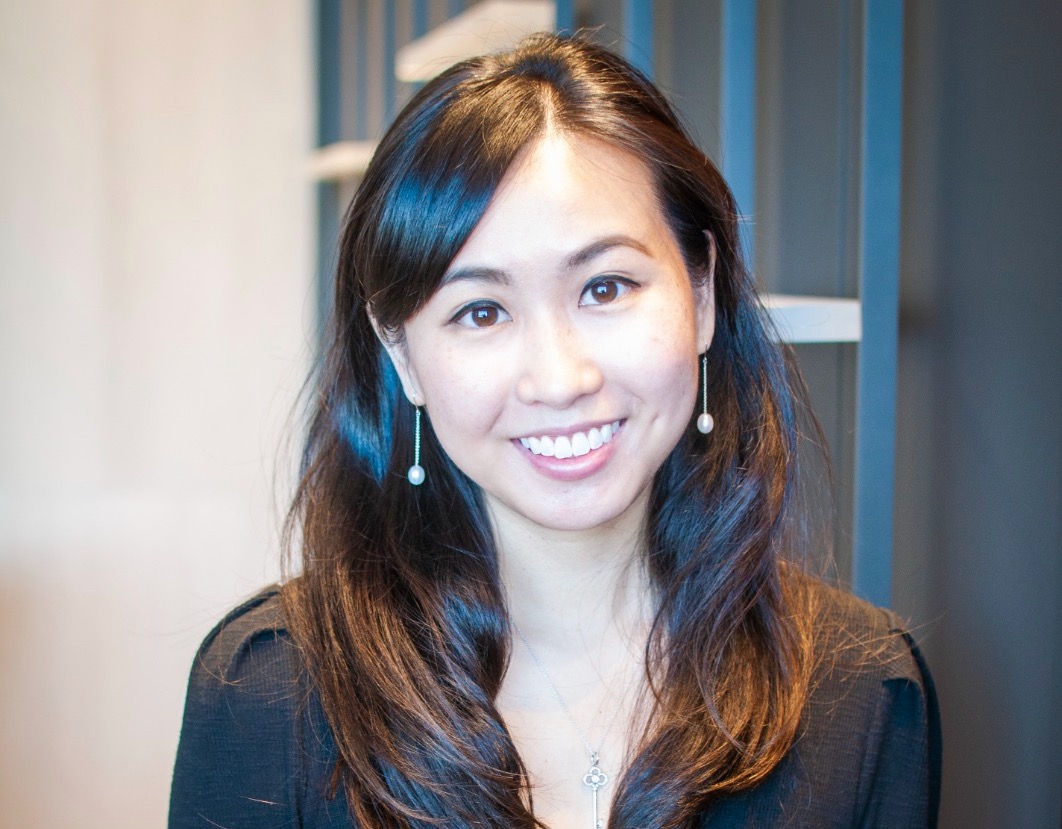
Annie Liang is an economic theorist with a focus on artificial intelligence and machine learning. Her research spans three areas: the economic and social implications of AI systems, the use of machine learning and other computational tools in economic modeling, and the optimal design and acquisition of information. Her recent work has examined questions such as how to delegate to AI systems whose alignment is unknown, how use of AI "clones" in search impacts welfare, and how to redefine creative ownership in the age of generative AI. More broadly, her research develops conceptual frameworks for understanding how AI and machine learning reshape incentives, information, and economic outcomes.
Annie received her S.B. in Mathematics and Economics from MIT and her Ph.D. in Economics from Harvard University, and is a recipient of the NSF CAREER Award.
@unpublished{liang2026creative,
author = {Annie Liang and Jay Lu},
title = {Creative Ownership in the Age of {AI}},
year = {2026},
note = {Working paper}
}@unpublished{golub2026human,
author = {Benjamin Golub and Annie Liang and Marciano Siniscalchi},
title = {Human or Machine? {A}ssessing {AI}'s Ability to Generate Game-Theory Questions},
year = {2026},
note = {Working paper}
}@unpublished{fudenberg2026friend,
author = {Drew Fudenberg and Annie Liang},
title = {Friend or Foe: Delegating to an {AI} whose Alignment is Unknown},
year = {2026},
note = {Working paper}
}@unpublished{gao2026llm,
author = {Wayne Gao and Sukjin Han and Annie Liang},
title = {How Well Do {LLMs} Predict Human Behavior? {A} Measure of their Pretrained Knowledge},
year = {2026},
note = {Working paper}
}@unpublished{liang2026clones,
author = {Annie Liang},
title = {Artificial Intelligence Clones},
year = {2026},
note = {Working paper}
}@unpublished{iakovlev2025value,
author = {Andrei Iakovlev and Annie Liang},
title = {The Value of Context: Human versus Algorithmic Evaluators},
year = {2025},
note = {Working paper}
}@unpublished{auerbach2025testing,
author = {Eric Auerbach and Annie Liang and Kyohei Okumura and Max Tabord-Meehan},
title = {Testing the Fairness-Accuracy Improvability of Algorithms},
year = {2025},
note = {R\&R at Journal of Political Economy}
}@unpublished{andrews2025transfer,
author = {Isaiah Andrews and Drew Fudenberg and Lihua Lei and Annie Liang and Chaofeng Wu},
title = {The Transfer Performance of Economic Models},
year = {2025},
note = {Working paper}
}@unpublished{liang2021games,
author = {Annie Liang},
title = {Games of Incomplete Information Played by Statisticians},
year = {2021},
note = {Working paper}
}@article{liang2026fairness,
author = {Annie Liang and Jay Lu and Xiaosheng Mu and Kyohei Okumura},
title = {Algorithm Design: A Fairness-Accuracy Frontier},
journal = {Journal of Political Economy},
note = {Forthcoming},
year = {2026}
}@article{liang2026using,
author = {Annie Liang},
title = {Using Machine Learning to Generate, Clarify, and Improve Economic Models},
journal = {Journal of Economic Literature},
note = {Accepted},
year = {2026}
}@article{fudenberg2026flexible,
author = {Drew Fudenberg and Wayne Gao and Annie Liang},
title = {How Flexible is that Functional Form? {Q}uantifying the Restrictiveness of Theories},
journal = {Review of Economics and Statistics},
year = {2026}
}@article{liang2024data,
author = {Annie Liang and Erik Madsen},
title = {Data and Incentives},
journal = {Theoretical Economics},
volume = {19},
number = {1},
pages = {407--448},
year = {2024}
}@article{liang2024fairness,
author = {Annie Liang and Jay Lu},
title = {Algorithmic Fairness and Social Welfare},
journal = {AEA Papers and Proceedings},
volume = {114},
pages = {628--632},
year = {2024}
}@article{fudenberg2022measuring,
author = {Drew Fudenberg and Jon Kleinberg and Annie Liang and Sendhil Mullainathan},
title = {Measuring the Completeness of Economic Models},
journal = {Journal of Political Economy},
volume = {130},
number = {4},
pages = {956--990},
year = {2022}
}@article{liang2022dynamically,
author = {Annie Liang and Xiaosheng Mu and Vasilis Syrgkanis},
title = {Dynamically Aggregating Diverse Information},
journal = {Econometrica},
volume = {90},
number = {1},
pages = {47--80},
year = {2022}
}@article{fudenberg2020machine,
author = {Drew Fudenberg and Annie Liang},
title = {Machine Learning for Evaluating and Improving Theories},
journal = {ACM SIGecom Exchanges},
volume = {18},
number = {1},
pages = {4--11},
year = {2020}
}@article{liang2020complementary,
author = {Annie Liang and Xiaosheng Mu},
title = {Complementary Information and Learning Traps},
journal = {Quarterly Journal of Economics},
volume = {135},
number = {1},
pages = {389--448},
year = {2020}
}@article{fudenberg2019predicting,
author = {Drew Fudenberg and Annie Liang},
title = {Predicting and Understanding Initial Play},
journal = {American Economic Review},
volume = {109},
number = {12},
pages = {4112--4141},
year = {2019}
}@article{liang2019inference,
author = {Annie Liang},
title = {Inference of Preference Heterogeneity from Choice Data},
journal = {Journal of Economic Theory},
volume = {179},
pages = {275--311},
year = {2019}
}@inproceedings{liang2018optimal,
author = {Annie Liang and Xiaosheng Mu and Vasilis Syrgkanis},
title = {Optimal and Myopic Information Acquisition},
booktitle = {Proceedings of the 2018 ACM Conference on Economics and Computation},
year = {2018}
}I teach a graduate course on information and learning.
A conversation-first Russian handbook for intermediate and advanced learners.
Email: liang.annie.h@gmail.com
Kellogg Global Hub
2211 Campus Drive, Evanston IL 60208